




Spinal decompression for foraminal stenosis: what to know
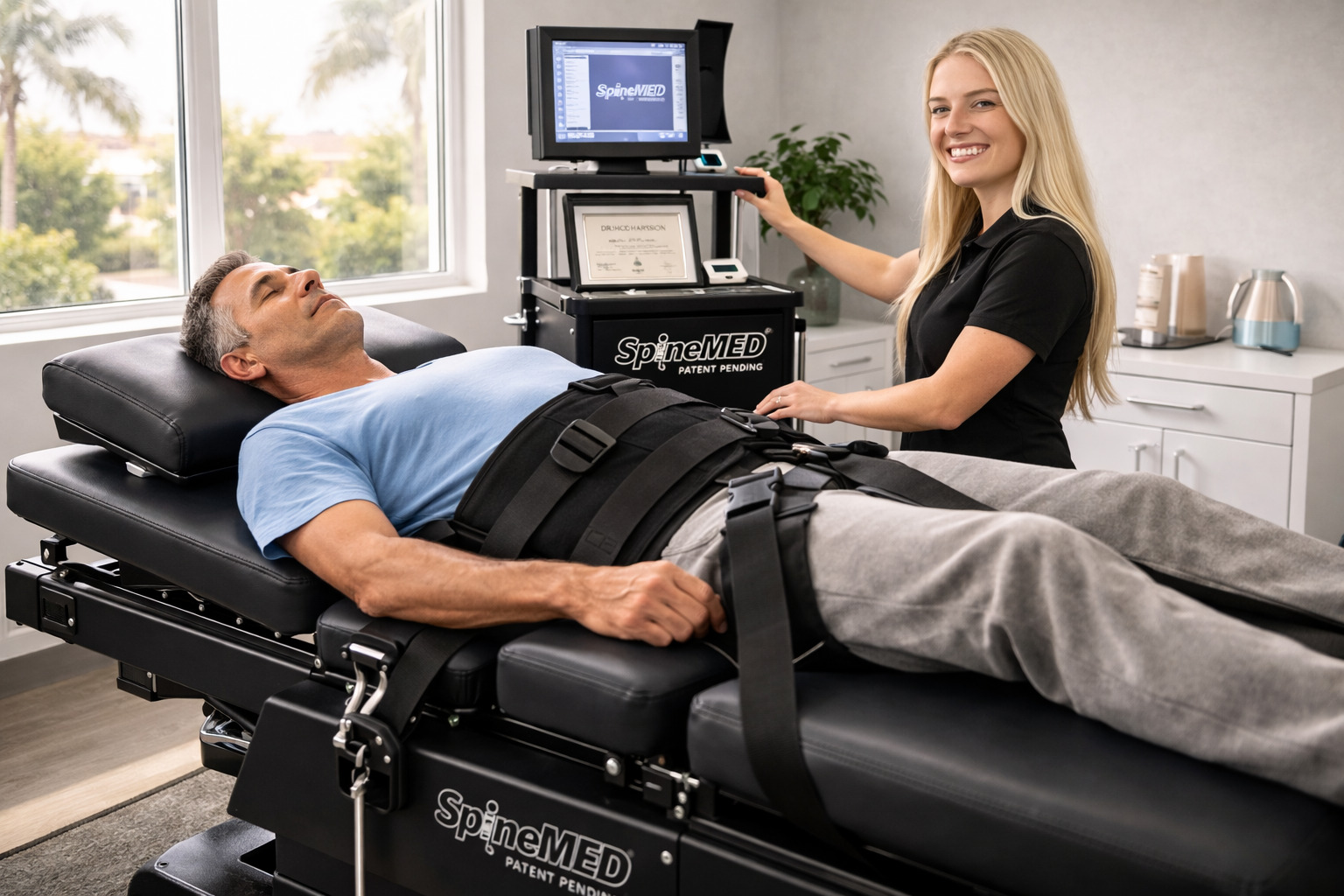
Foraminal stenosis occurs when the small openings in the spine (neural foramina) narrow and compress nearby nerve roots. This can lead to pain, tingling, numbness, or weakness along the affected nerve pathway.
Spinal decompression is a non-surgical therapy designed to reduce this pressure by gently increasing the space between vertebrae.
What Causes Foraminal Stenosis?
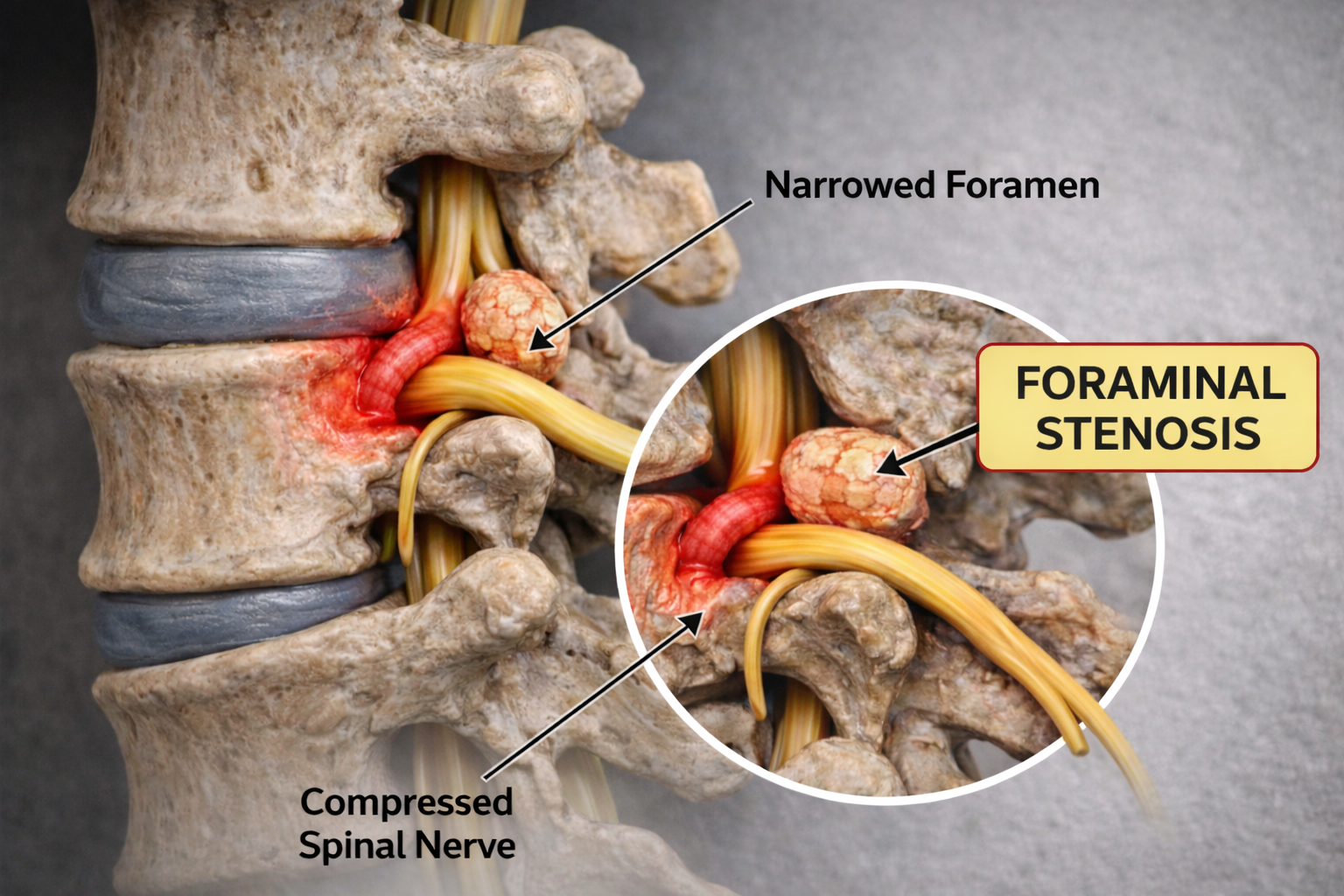
Foraminal stenosis develops when structural changes reduce the size of the nerve openings. These changes are typically related to aging or repeated stress on the spine.
Common causes include:
- Disc degeneration: Loss of disc height reduces space for nerves
- Herniated discs: Bulging discs press on nerve roots
- Bone spurs (osteophytes): Extra bone growth narrows nerve pathways
- Facet joint arthritis: Thickened joints reduce available space
- Ligament thickening: Reduced flexibility contributes to narrowing
Age-related wear and tear—particularly arthritis and bone spur formation—is one of the most common contributors to spinal stenosis (Mayo Clinic).
How Is Foraminal Stenosis Diagnosed?
Diagnosis combines imaging with physical examination to confirm nerve compression.
Imaging tools:
- MRI: Detects soft tissue problems like disc herniation
- CT scan: Shows bone-related narrowing
Physical tests:
- Spurling’s test: Assesses nerve compression in the neck
- Straight leg raise test: Evaluates lower back nerve irritation
Healthcare providers correlate imaging findings with symptoms to avoid false positives, as imaging alone may not always reflect symptom severity (Cleveland Clinic).
How Severe Is Foraminal Stenosis?
Severity depends on the degree of narrowing and symptom presentation:
- Mild: Occasional, position-dependent symptoms
- Moderate: More frequent discomfort with activity
- Severe: Persistent pain, weakness, or neurological deficits
This classification helps guide treatment decisions.
How Does Disc Height Loss Lead to Nerve Compression?
Intervertebral discs act as cushions between vertebrae. When they lose height:
- Vertebrae move closer together
- Foraminal openings shrink
- Nerve roots become compressed
This process is commonly linked to degenerative disc disease and can result in nerve-related symptoms such as sciatica or radiculopathy (Johns Hopkins Medicine).
How Does Spinal Decompression Therapy Work?
Spinal decompression uses controlled traction to gently stretch the spine and reduce pressure within discs.
Potential effects include:
- Reduced pressure inside discs
- Increased space around nerve roots
- Improved nutrient exchange
- Reduced stress on joints
Some studies suggest traction may provide short-term relief in certain patients. However, outcomes vary, and long-term benefits remain uncertain. Reviews of traction therapy show mixed results depending on patient selection and methodology (Biology Insights).
Authoritative sources such as the Mayo Clinic and Cleveland Clinic emphasize that conservative treatments can help manage symptoms, but effectiveness differs across individuals.
Who Is a Good Candidate?
Spinal decompression may be appropriate for individuals with:
- Lumbar or cervical foraminal stenosis
- Herniated or bulging discs
- Chronic nerve-related pain
- A preference for non-surgical care
It may not be suitable for those with:
- Spinal fractures or tumors
- Severe osteoporosis
- Advanced neurological deficits
- Cauda equina syndrome
A medical evaluation is necessary to determine candidacy.
Who Should Avoid Spinal Decompression?
Spinal decompression is not recommended for certain conditions:
Avoid if you have:
- Spinal malignancy
- Active infection
- Vertebral fractures
Use caution if you have:
- Severe osteoporosis
- Post-surgical instability
Possible side effects include:
- Temporary soreness
- Mild symptom flare-ups
Proper screening improves safety and outcomes.
What Are the Non-Surgical Alternatives?
Several conservative treatments can help manage symptoms:
- Physical therapy: Improves strength and mobility
- Epidural steroid injections: Reduce inflammation
- Medications: NSAIDs and nerve pain medications
- Chiropractic care: May improve joint function
Conservative treatments are often recommended before surgery and can be effective in managing symptoms (Mayo Clinic Health System).
When Is Surgery Necessary?
Surgery may be recommended if symptoms worsen or fail to improve with conservative care.
Indications include:
- Progressive weakness
- Loss of bowel or bladder control
- Severe, persistent pain
Procedures such as foraminotomy or laminectomy aim to relieve nerve compression.
What Conditions Can Spinal Decompression Help?
Spinal decompression is often used for:
- Lumbar foraminal stenosis (sciatica)
- Cervical foraminal stenosis (arm pain and numbness)
- Herniated or bulging discs
- Degenerative disc disease
Symptoms typically follow nerve pathways, helping clinicians identify the affected level.
What Happens During a Session?
During a session:
- You lie on a motorized decompression table
- A harness stabilizes the spine
- The system applies gentle traction cycles
Sessions usually last 20–30 minutes and are repeated over several weeks.
What Results Can You Expect?
Some patients report:
- Reduced radiating pain
- Improved mobility
- Decreased tingling or numbness
- Better activity tolerance
Results vary depending on severity and duration. Combining therapy with rehabilitation exercises may improve outcomes.
Common Questions
Can foraminal stenosis heal without surgery?
Mild cases may improve, but structural narrowing often remains.
Is walking helpful?
Walking can improve circulation but may aggravate symptoms in severe cases.
What worsens symptoms?
Prolonged standing, spinal extension, and heavy loading.
Can spinal decompression help avoid surgery?
It may reduce symptoms in some cases, depending on severity.
When should you seek care?
Seek medical attention if symptoms persist or worsen, especially if you experience:
- Loss of bowel or bladder control
- Progressive weakness
- Saddle anesthesia
Medical Disclaimer
This content is for educational purposes only and does not replace professional medical advice. Always consult a licensed healthcare provider for diagnosis and treatment.
Start Your Spine Care Plan
If you are experiencing persistent nerve-related symptoms, a clinical evaluation can help identify the cause and guide treatment. Early intervention may improve outcomes and prevent progression.
Schedule your spinal decompression evaluation at Disc Therapy Institute in Plantation, South Florida or call us at (954)-472-7975 to determine if you are a candidate for non-surgical nerve relief.
.png)
.png)
.png)
.png)
.webp)
.webp)
.webp)