




How Long Does Sciatica Take to Improve? Recovery Timeline & What to Expect
Sciatica improves within 2 to 6 weeks in most mild cases. Recovery time increases when nerve compression, disc damage, or poor movement patterns persist. Severe cases may last 8–12 weeks or longer depending on treatment and inflammation levels.
Most acute low back pain and sciatica cases improve without invasive treatment
You will understand timelines, causes, treatments, and when to seek care next.
Are All Sciatica Cases the Same?
No. Sciatica recovery time depends on the underlying cause of nerve compression. Different conditions affect healing speed and treatment response.
Disc Herniation Sciatica (Most Common)
Disc herniation sciatica occurs when a lumbar disc presses on a nerve root. Recovery typically takes 2 to 12 weeks, depending on herniation size and inflammation.
Spinal Stenosis Sciatica
Spinal stenosis sciatica occurs when the spinal canal narrows and compresses nerves. Recovery is often slower and may become chronic, especially in older adults.
Piriformis Syndrome (Muscle-Related Sciatica)
Piriformis syndrome occurs when the piriformis muscle compresses the sciatic nerve. Recovery is variable, often improving with targeted muscle therapy.
Clinical insight: Correctly identifying the cause of sciatica improves treatment selection and shortens recovery time.
What Is Sciatica and Why Does It Last Weeks?
Sciatica occurs when the sciatic nerve becomes compressed or irritated, most commonly from a lumbar disc herniation (L4–S1). The nerve inflammation drives pain, tingling, and mobility limitations.
Common causes include:
- Herniated lumbar disc compresses nerve roots
- Spinal stenosis narrows nerve pathways
- Piriformis muscle compresses the nerve
- Degenerative disc disease alters disc structure
Key mechanism: Inflammatory chemicals (cytokines) irritate the nerve root → pain radiates down the leg → healing depends on reducing pressure and inflammation.
Next, you will see how long each recovery stage typically lasts.
What Is the Typical Sciatica Recovery Timeline?
Sciatica follows a predictable inflammatory and healing cycle in mild to moderate cases.
Acute phase (0–2 weeks):
- Inflammation peaks
- Sharp leg pain and nerve sensitivity increase
Subacute phase (2–6 weeks):
- Pain stabilizes
- Mobility begins improving
- Nerve irritation decreases
Recovery phase (6+ weeks):
- Function improves
- Residual stiffness or mild symptoms may persist
Clinical data shows 70–90% of patients improve within 6 weeks with conservative care (American College of Physicians, 2017)
Recovery timelines depend on several variables.
What Factors Affect How Long Sciatica Takes to Improve?
Sciatica recovery varies because nerve compression severity and tissue health differ per person. These variables determine progression speed.
Severity of compression
- Mild disc bulge heals faster than large herniation
Disc condition
- Hydrated discs recover better than degenerated discs
Age and healing capacity
- Younger tissue repairs faster due to better circulation
Body weight and spinal load
- Higher load increases mechanical stress on the lumbar spine and prolongs inflammatory response
Movement and posture habits
- Poor ergonomics sustain neural compression and prolong inflammatory signaling
Treatment consistency
- Regular therapy supports functional recovery and stabilizes spinal mechanics
Early intervention strategies influence symptom progression and functional recovery.
What Helps Sciatica Improve Faster at Home?
Early management reduces inflammation and supports nerve recovery.
Effective strategies include:
- Walking daily improves circulation and nerve mobility
- Avoiding prolonged sitting reduces lumbar pressure
- Gentle stretching improves hip and spine flexibility
- Using heat or ice reduces inflammation
Important principle: Movement stabilizes recovery. Prolonged rest often delays healing.
Next, you will understand how clinical care changes recovery timelines.
How Long Does Sciatica Take to Improve With Conservative Treatment?
Conservative care improves sciatica by decreasing neural compression and restoring spinal mechanics. Most patients notice improvement within 4 to 8 weeks of consistent care.
Common treatments:
- Physical therapy strengthens core and stabilizes spine
- Chiropractic care restores joint mobility
- Postural correction reduces repeated mechanical stress
- Anti-inflammatory strategies lower inflammatory signaling
Clinical insight: Structured care reduces recurrence risk and supports long-term functional improvement compared to passive rest.
Does Spinal Decompression Speed Up Sciatica Recovery?
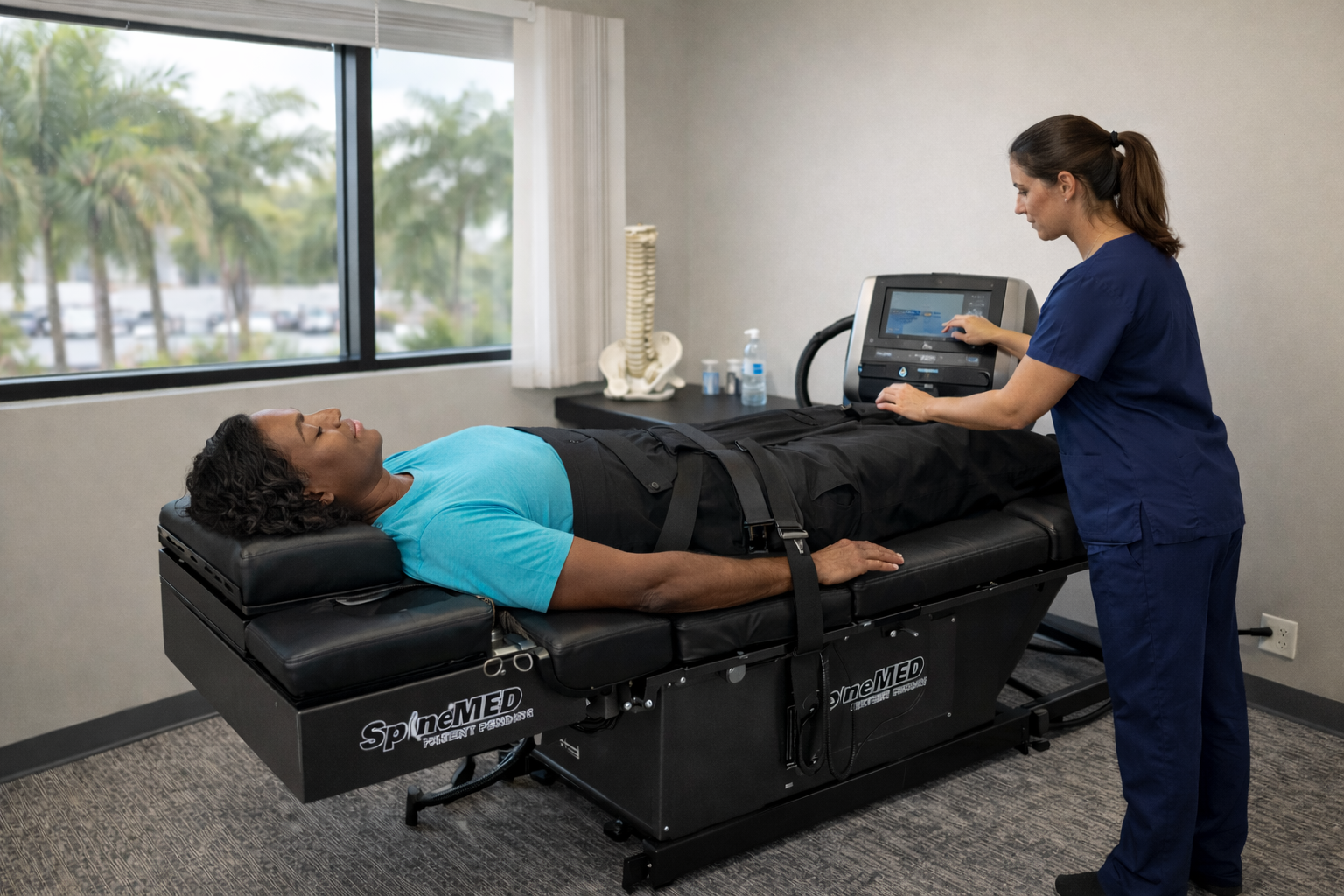
Spinal decompression may support recovery by reducing pressure inside the affected disc. It is used in selected cases, particularly for disc-related sciatica, and is not considered first-line treatment for all patients.
Conservative care such as physical therapy and movement-based rehabilitation remains the primary approach in most clinical guidelines (American College of Physicians [ACP], 2017).
Observed effects:
- Disc pressure decreases
- Nerve root compression reduces
- Nutrient diffusion into intervertebral discs may improve
Some patients experience early symptom relief within initial sessions, although disc healing remains gradual over several weeks.
Clinical context: Spinal decompression is typically considered when symptoms persist despite initial conservative care or when disc-related nerve compression is clearly identified.
Evidence note: Research shows mixed to moderate support for decompression in selected patients (Spine Journal, mechanical decompression studies).
What Are Signs Sciatica Is Improving?
Sciatica improves when nerve irritation decreases and symptoms centralize.
Positive signs include:
- Pain moves from leg toward lower back (centralization)
- Tingling and numbness decrease
- Walking tolerance improves
- Muscle tightness reduces
Centralization is widely used in McKenzie Method rehabilitation as a recovery indicator.
Next, you will learn warning signs that require attention.
What Are Signs Sciatica Is Getting Worse?
Sciatica worsens when nerve compression increases or neurological function declines.
Warning signs include:
- Progressive leg weakness
- Increasing numbness in foot or toes
- Loss of coordination
- Severe or escalating pain
These symptoms may indicate worsening nerve compression and require medical evaluation.
Next, you will understand when to seek professional care.
When Should You See a Doctor for Sciatica?
You should seek care when sciatica does not improve within 4 to 6 weeks or worsens.
Seek evaluation if:
- Pain persists beyond 6 weeks
- Symptoms disrupt sleep or walking
- Numbness or weakness progresses
- Home care fails to improve symptoms
Clinical evaluation may include:
- Physical exam assesses nerve function and movement patterns
- Straight leg raise test detects nerve root irritation, with ~91% sensitivity for lumbar disc herniation
- MRI confirms structural causes such as disc herniation and is typically recommended after 6 weeks of persistent symptoms or sooner if severe neurological deficits appear
Early evaluation helps prevent persistent nerve compression and long-term neurological deficits.
Common questions focus on duration, severity, and treatment outcomes.
FAQs About Sciatica Recovery Time
How long does sciatica last without treatment?
Sciatica lasts 2–6 weeks in mild cases. Persistent nerve compression may extend symptoms beyond several weeks and require treatment.
Can sciatica become chronic?
Yes. Sciatica becomes chronic when symptoms last over 3 months, often due to unresolved disc or nerve compression.
What delays sciatica healing?
Severe disc herniation, prolonged sitting, excess weight, poor posture, and inconsistent treatment delay recovery.
Is surgery required for sciatica?
Most cases improve without surgery. Surgery is considered when severe neurological deficits or persistent compression occur.
Medical Disclaimer
This content provides general educational information and does not replace medical advice, diagnosis, or treatment. Always consult a qualified healthcare provider for evaluation of symptoms, diagnosis, and personalized care recommendations.
References
- Qaseem A, Wilt TJ, McLean RM, Forciea MA. Noninvasive Treatments for Acute, Subacute, and Chronic Low Back Pain. American College of Physicians Clinical Guideline. 2017.
- Maher C, Underwood M, Buchbinder R. Non-specific Low Back Pain. New England Journal of Medicine. 2017.
- Spine Journal. Studies on mechanical spinal decompression therapy for lumbar disc herniation and radiculopathy.
Ready to Address Your Sciatica?
If your symptoms persist or interfere with daily life, a structured evaluation helps identify the cause and the most effective treatment approach.
Schedule a consultation with Disc Therapy Institute to:
- Identify the source of nerve irritation
- Understand your recovery timeline
- Explore non-surgical treatment options
Early care improves outcomes and reduces the risk of chronic sciatica.
.png)
.png)
.png)
.png)
.webp)
.webp)
.webp)