




How Many Spinal Decompression Sessions Do You Need? Treatment Plans Explained
If you consider spinal decompression therapy, you usually want one clear answer first. How many sessions do you need before you feel real relief? The honest answer depends on your spine, your symptoms, and your daily habits. This guide explains spinal decompression treatment plans in a clear and practical way, using clinical insight, patient experience, and evidence-based care principles.
You read what spinal decompression is, how sessions are structured, and what affects the total number of visits. You also learn how progress is measured and how decompression works with other therapies.
Understanding Spinal Decompression Treatment Plans
What is a spinal decompression treatment plan?
A spinal decompression treatment plan is a structured schedule of sessions designed to reduce pressure on spinal discs and nerves. The plan defines session count, frequency, and progression. Chiropractors and spine specialists adjust the plan based on your diagnosis, imaging results, and response to care.
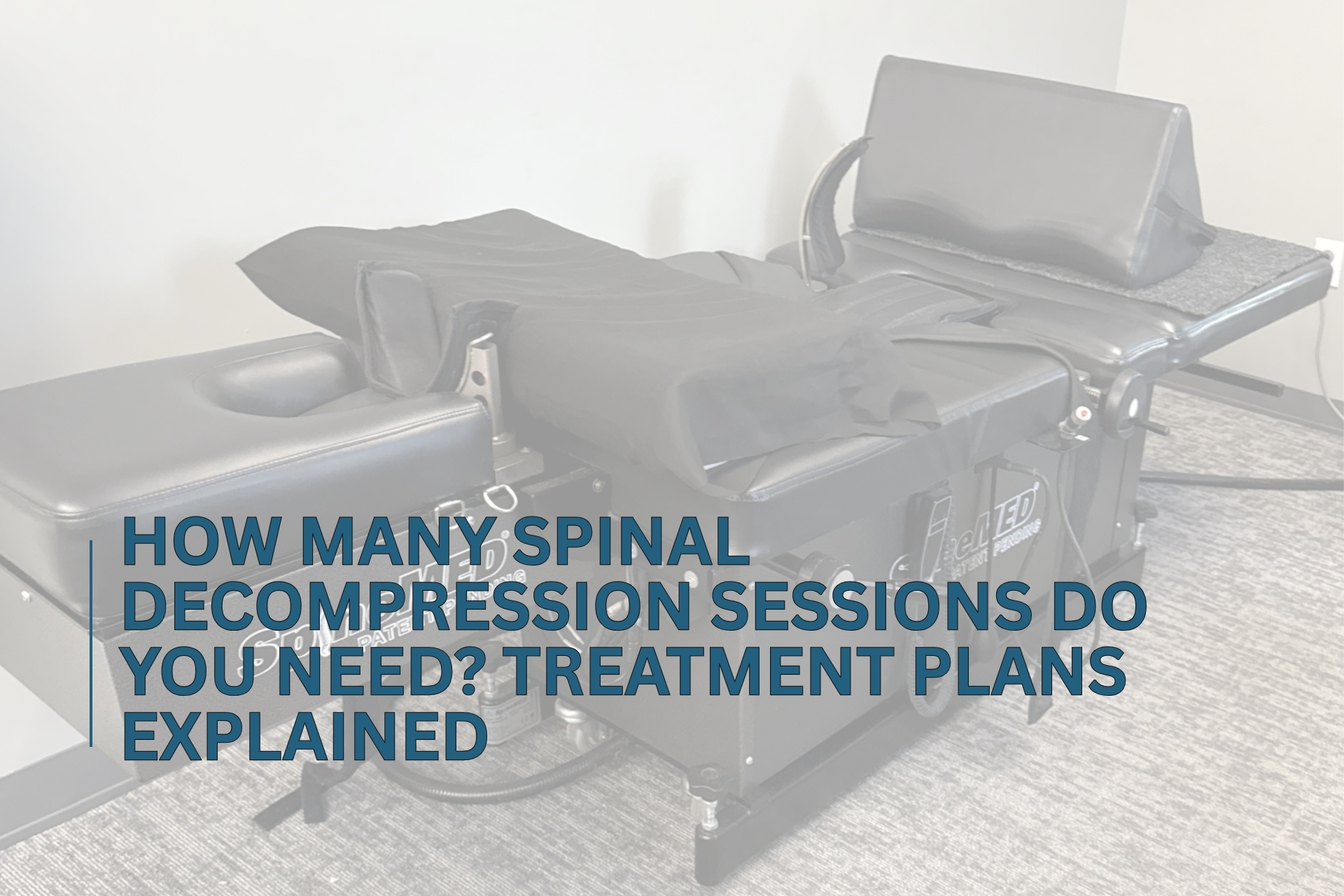
Spinal decompression treatment uses controlled traction. The table applies precise forces to the spine. This process creates negative disc pressure. Lower disc pressure helps retract bulges and improves nutrient flow.
What are the goals of spinal decompression treatment?
The primary goal of spinal decompression treatment is nerve pressure reduction. Secondary goals support long-term spinal health.
Key goals include:
- Reducing disc compression and nerve irritation
- Improving spinal alignment and mobility
- Increasing disc hydration and nutrient exchange
- Decreasing pain intensity and frequency
- Supporting daily function without medication
Clinical studies published in journals like The Journal of Physical Therapy Science report pain reduction and functional improvement in patients with disc-related low back pain after structured decompression programs.
You move to the next section by learning how many sessions most people need to reach these goals.
Why does spinal decompression require multiple sessions?
Spinal decompression requires multiple sessions because disc tissue heals slowly. Intervertebral discs have limited blood supply. Healing depends on repeated pressure changes over time.
One session can reduce muscle tension. Multiple sessions influence disc mechanics. Consistency creates lasting structural change. Most providers schedule sessions across several weeks to allow adaptation without overstressing spinal tissues.
Next, you see what a typical session count looks like in real treatment plans.
How Many Spinal Decompression Sessions Are Typical
What is the average number of spinal decompression sessions?
Most patients complete 15 to 30 spinal decompression sessions. This range reflects common care plans used in chiropractic and rehabilitation clinics.
Typical patterns include:
- Mild disc issues: 12 to 15 sessions
- Moderate disc bulge or sciatica: 20 to 24 sessions
- Chronic disc herniation: 25 to 30 sessions
These numbers align with treatment protocols used in non-surgical spinal decompression research and clinical practice guidelines.
You now explore how short-term and long-term care differ.
Short-term vs long-term spinal decompression care
Short-term spinal decompression care focuses on symptom relief. It often lasts four to six weeks. Long-term care targets disc recovery and spinal stability. It may extend over eight to twelve weeks.
Short-term care:
- Prioritizes pain reduction
- Uses higher session frequency
- Addresses acute flare-ups
Long-term care:
- Builds structural resilience
- Supports posture correction
- Reduces relapse risk
Your provider chooses the approach based on your diagnosis and recovery goals.
How often are spinal decompression appointments scheduled?
Most spinal decompression appointments occur two to four times per week. Early phases use higher frequency. Later phases reduce visits as symptoms improve.
A common schedule looks like this:
- Weeks 1 to 3: 3 to 4 sessions per week
- Weeks 4 to 6: 2 to 3 sessions per week
- Maintenance phase: 1 session per week or less
Next, you learn what personal factors influence how many sessions you need.
Factors That Affect Spinal Decompression Session Count
How does condition severity affect spinal decompression?
Condition severity strongly influences spinal decompression session count. Disc bulges respond faster than large herniations. Nerve compression with weakness or numbness often requires longer care.
Examples:
- Mild lumbar disc bulge often improves within 15 sessions
- Multi-level disc degeneration may require 30 sessions or more
- Post-surgical disc changes often respond slowly
MRI findings and neurological exams guide these decisions.
Chronic pain vs acute pain and spinal decompression
Acute pain usually responds faster to spinal decompression. Chronic pain reflects long-term tissue adaptation and inflammation.
Acute pain characteristics:
- Short symptom duration
- Minimal compensatory movement
- Faster improvement curve
Chronic pain characteristics:
- Symptoms longer than three months
- Muscle guarding and posture changes
- Slower but steady improvement
Research in Spine Journal shows chronic disc patients benefit from longer decompression protocols combined with rehabilitation.
How do age and lifestyle affect spinal decompression results?
Age influences tissue elasticity and healing speed. Younger patients often experience faster disc rehydration. Older patients still benefit but progress gradually.
Lifestyle factors also matter:
- Sedentary work increases disc loading
- Smoking reduces disc nutrition
- Regular movement supports outcomes
Your daily habits either support or slow spinal decompression results.
Next, you discover how progress unfolds during treatment.
Spinal Decompression Session Progress and Milestones
What are early spinal decompression results?
Early spinal decompression results often appear within the first five to eight sessions. You may notice reduced muscle tightness and easier movement.
Common early changes include:
- Lower pain intensity
- Reduced leg or arm tingling
- Improved sitting tolerance
These changes signal nerve pressure reduction rather than full disc healing.
What improvements occur mid-treatment?
Mid-treatment improvements typically appear between sessions 10 and 20. Disc pressure decreases further. Muscles adapt to improved spinal mechanics.
Mid-phase changes include:
- Longer pain-free periods
- Improved sleep quality
- Increased daily activity tolerance
Clinicians often reassess imaging and functional tests during this stage.
When are spinal decompression goals achieved?
Spinal decompression goals are achieved when pain stabilizes and function improves consistently. This often occurs near the end of the planned session count.
Indicators include:
- Minimal or no radiating pain
- Stable posture and movement
- Ability to resume normal activities
Next, you learn when plans change and why.
Can You Need Fewer or More Spinal Decompression Sessions
What are signs spinal decompression is working?
Clear signs spinal decompression is working appear early and build over time.
Positive indicators include:
- Pain decreases after sessions
- Recovery between sessions improves
- Daily movement feels easier
Objective findings such as improved range of motion support these observations.
When are spinal decompression plans extended?
Spinal decompression plans are extended when progress plateaus or symptoms fluctuate. Extensions are common in chronic or complex cases.
Reasons for extension include:
- Multiple disc levels involved
- Poor compliance with home advice
- Ongoing lifestyle stressors
Ethical providers explain extensions using measurable findings, not vague promises.
How is spinal decompression frequency adjusted?
Spinal decompression frequency is adjusted based on response. Providers reduce frequency as stability improves.
Adjustment strategies include:
- Transitioning to weekly sessions
- Combining decompression with strengthening
- Introducing self-management tools
Next, you see how decompression integrates with other treatments.
Combining Spinal Decompression With Other Treatments
Chiropractic care and spinal decompression sessions
Chiropractic care often complements spinal decompression sessions. Adjustments improve joint mobility and alignment.
Benefits of combined care include:
- Faster pain reduction
- Improved spinal mechanics
- Better long-term stability
This combination is widely used in evidence-based chiropractic clinics.
Physical therapy and spinal decompression schedules
Physical therapy enhances spinal decompression outcomes. Therapists teach movement control and muscle activation.
Physical therapy focuses on:
- Core stabilization
- Flexibility training
- Functional movement retraining
Studies in Archives of Physical Medicine and Rehabilitation support combined traction and exercise programs.
Rehab programs with spinal decompression
Rehab programs integrate decompression, exercise, and education. These programs reduce recurrence rates.
Rehab elements include:
- Posture training
- Ergonomic coaching
- Progressive loading exercises
Next, common questions are answered directly.
FAQs About Spinal Decompression Sessions
How soon does spinal decompression start working?
Spinal decompression often starts working within one to two weeks. Early relief reflects reduced nerve pressure. Disc healing continues over several weeks with consistent sessions.
Can spinal decompression sessions be spaced out?
Spinal decompression sessions can be spaced out after initial improvement. Early phases require closer spacing. Later phases focus on maintenance and stability.
What happens after spinal decompression treatment ends?
After spinal decompression treatment ends, you transition to self-care. Maintenance exercises and posture habits protect results. Some patients schedule periodic check-ins.
You now understand how spinal decompression sessions are planned, adjusted, and evaluated. You move forward knowing what influences session count and how progress is measured in real clinical settings.
Struggling with Back Chronic Pain in South Florida?
Discover how Spinal Decompression Therapy can offer lasting relief from disc-related back and neck pain—completely drug-free and non-invasive.
We Offer:
🔹Advanced Spinal Decompression Therapy — A proven, FDA-cleared solution to relieve pressure from herniated discs, sciatica, bulging discs, and degenerative disc disease. Backed by clinical studies with long-term success in reducing pain and restoring function.
🔹Tailored Treatment Plans — Every session is customized to your condition, guided by experienced spinal care professionals committed to measurable improvement.
🔹Compassionate, Supportive Team — At every stage of your journey, we put your comfort and recuperation first.
🔹Expert Leadership — Our care is led by renowned specialists in non-surgical spinal care and rehabilitation.
Learn More:
📘 What is Spinal Decompression Therapy?
📘 What to Expect During Your First Session
📘 Non-Surgical Relief for Herniated Discs—Real Success Stories
📘 Which Conditions Benefit from Spinal Decompression?
Visit Us:
📍 Conveniently located at 100 NW 100th Ave, Plantation, serving Palm Beach, Fort Lauderdale, and Miami.
💬 Over 1,000+ sessions successfully completed with a patient-first philosophy.
🏥 Trusted by chiropractic and pain management professionals throughout South Florida.
Take the First Step Toward a Pain-Free Life
Contact Spinal Decompression Therapy Institute today or call us at +1 954-472-7975.
No medications. No surgery. Just results.
👉 Follow us for patient stories, expert advice, and daily updates:
.png)
.png)
.png)
.png)
.webp)
.webp)
.webp)